Categories
leftover food My recipes

(506) The Hidden Magic of leftovers

In every Indian kitchen, leftovers are a daily reality. Roti from last night’s dinner, a cup of cooked rice, or a ladleful of dal waiting quietly in the fridge. While many see them as second-grade meals, I believe they’re hidden treasures. With just a touch of creativity and a sprinkle of love, leftover food can be transformed into delicious, nourishing, and time-saving dishes. It’s not just about reducing waste—it’s about honoring the food we’ve already prepared and giving it a second life on our plates.

Cooking with leftover is a smart choice as it reduces food wastage, saves time and efforts, nutritionally smart as some leftover like rice, roti and boiled potatoes develop resistant starch, which improves gut health, controls blood sugar and increase satiety.It is budget friendly and last but very important according to me as it encourages culinary creativity.

Here are some leftover series category.

Leftover Roti-Phulke ki nayi pahechan

Leftover Rice-Ek Aur baar Chawal.

  • Rice chilla.
  • Rice Tikki
  • Rice Appe
  • Rice kheer
  • Fried Rice.

Leftover Dal-Dal se Zaika.

  • Dal stuffed Paratha.
  • Dal Dhokli.
  • Dal Tikki or Pakoda.

Leftover Sabji-Sabji ka naya magic.

  • Stuffed Paratha.
  • Pulao.
  • Mixed Sabji Thepla.
  • Sabji Cutlets.

Leftover Sweets- Mithashwali Nayi Sharuat.

  • Sakkarpara from sugar syrup of Gulab Jamun.
  • Sweet stuffed Paratha with halva or laddu.
  • Sweet Bhakhri- Dashmi
List Of My Recipes

Categories
chutney dips My recipes

(505) Chutneys and Dips

Both chutneys and dips are used as accompaniments to enhance the taste of food, they differ in origin, ingredients, preparation, and cultural use. Chutney is a traditional part of Indian meals for centuries. Often served with rice, roti, dosa, snacks, or even as a palate cleanser. Whereas Dips more common in Western cuisines (American, Maxican, Mediterranean,  etc.). Dips are served with chips, crackers, vegetables, or breads (like pita). Used as an appetizer, snack, or party food.

Chutneys are made from herbs (coriander, mint), fruits (mango, tamarind), vegetables (tomato, onion, garlic), spices, and sometimes jaggery or sugar. Usually includes strong spices like mustard seeds, cumin, hing, curry leaves, etc. Whereas Dips typically made with dairy (cheese, yogurt, cream), legumes (hummus from chickpeas), or condiments (mayonnaise, sour cream).Uses herbs like parsley, dill or paprika

Chutney can be spicy, tangy, sweet, or bitter. Sometimes it may be layered flavors due to roasting or tempering. Whereas Dips are generally mild, creamy, or cheesy. These are less spicy and complex in flavor.

Chutney can be raw or cooked.Texture of chutney ranges from coarse to smooth, chunky to paste-like.It may be ground in a stone mortar, mixer, or hand-pounded. Whereas Dips are usually blended to a smooth consistency.Rarely cooked; if so, it’s mild heating (e.g., cheese dips).

While chutneys and dips may seem similar in function, they are culturally and culinarily distinct. Chutneys are deeply rooted in Indian traditions, known for bold spices and diverse textures, whereas dips are creamier and milder, designed for snacking. Both have their own charm and can even inspire fusion recipes!

Chutneys vary widely in flavor—spicy, tangy, sweet, or pungent—and are often made using fresh, seasonal, and regional ingredients. Here are some of the most popular types:

Dips are more commonly associated with snacks, party platters, or appetizers, and are generally milder in taste. Here are some of the most popular types:

A Flavorful Bridge Between Cultures

Whether it’s a vibrant green coriander chutney from an Indian thali or a creamy bowl of hummus at a Mediterranean table, chutneys and dips connect us to cultures, memories, and traditions. Each spoonful tells a story—of spice, texture, and comfort. Try experimenting with both in your kitchen, and let your meals become a beautiful blend of global flavors.

👉 And as always, serve with love and a smile. 😊

List Of My Recipes

Categories
Chilas Dosa My recipes

(504) Hign Protein Dosa

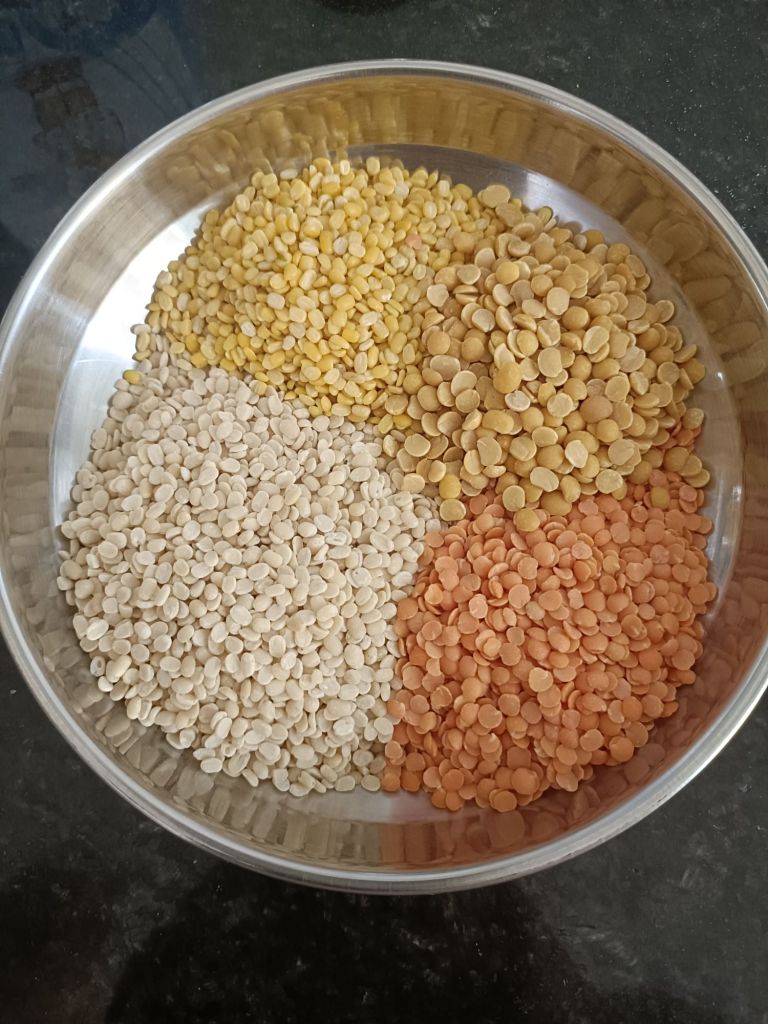
Moong dal : Light on digestion, rich in folate, B vitamins, and iron. Balances all 3 doshas (especially good for Pitta and Kapha).
Udad dal : High in protein, calcium and iron.Helps to strengthens bones, boosts energy, and improves digestion.
Masoor dal : Rich in iron and antioxidants. It promotes skin health and supports heart health. Good for Pitta.
Tur dal : Excellent source of folic acid, potassium, and protein. Balances Kapha and Vata.

Total protein content in 1 cup of mix dal is 47.5 g.

Ingredients

  • ¼ cup Yellow Moong dal.
  • ¼ cup Masoor dal.
  • ¼ cup Udad dal.
  • ¼ cup Tur dal.
  • 1½ tsp. Salt
  • 2 inch long Ginger piece.
  • 2 Green chilies.
  • 1 tbsp. Curd.

Method

  1. In a mixing bowl mix all dals and wash them two times.
  2. Soak  them for 8-10 hours.
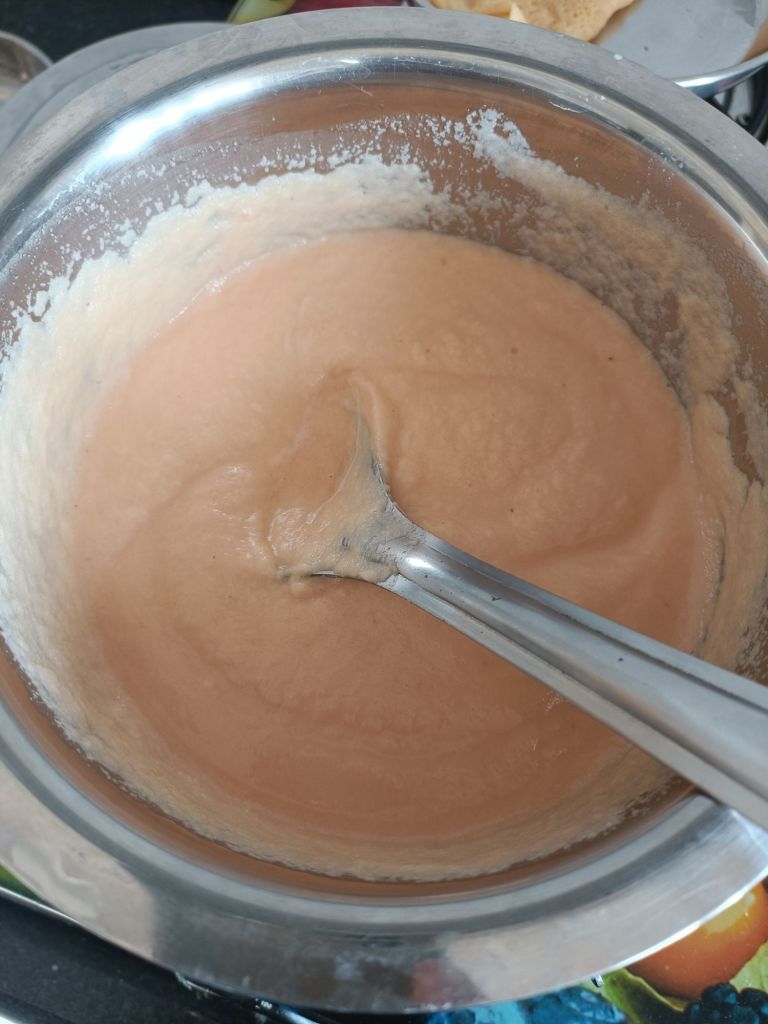
  3. After 10 hours drain the dal, add all other ingredients and grind them into fine paste. High Protein dosa batter is ready to use.
  4. Add water if needed to meet the consistency as shown in video.
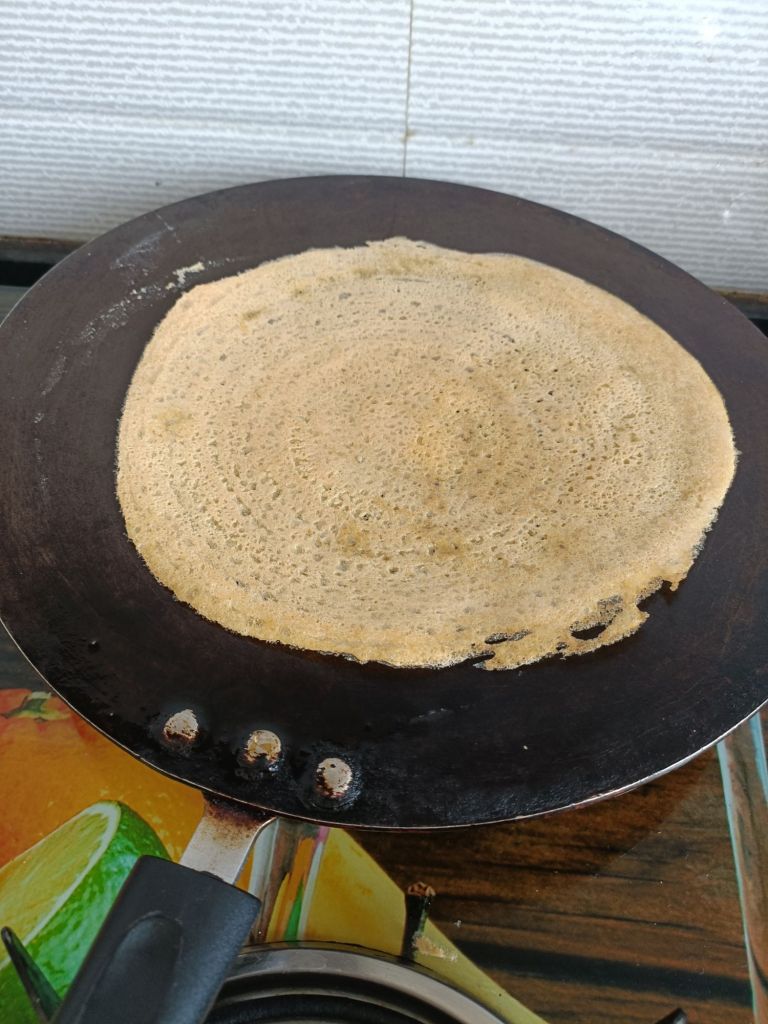
  5. Heat the nonstick tawa and pour ½ cup of batter. Spread this batter in circular manner and make a dosa.
  6. Serve hot with Coconut chutney, Daliya dal chutney, Milagai podi and Sambhar or as you wish but serve with love and smile.
Categories
My recipes onepot recipe

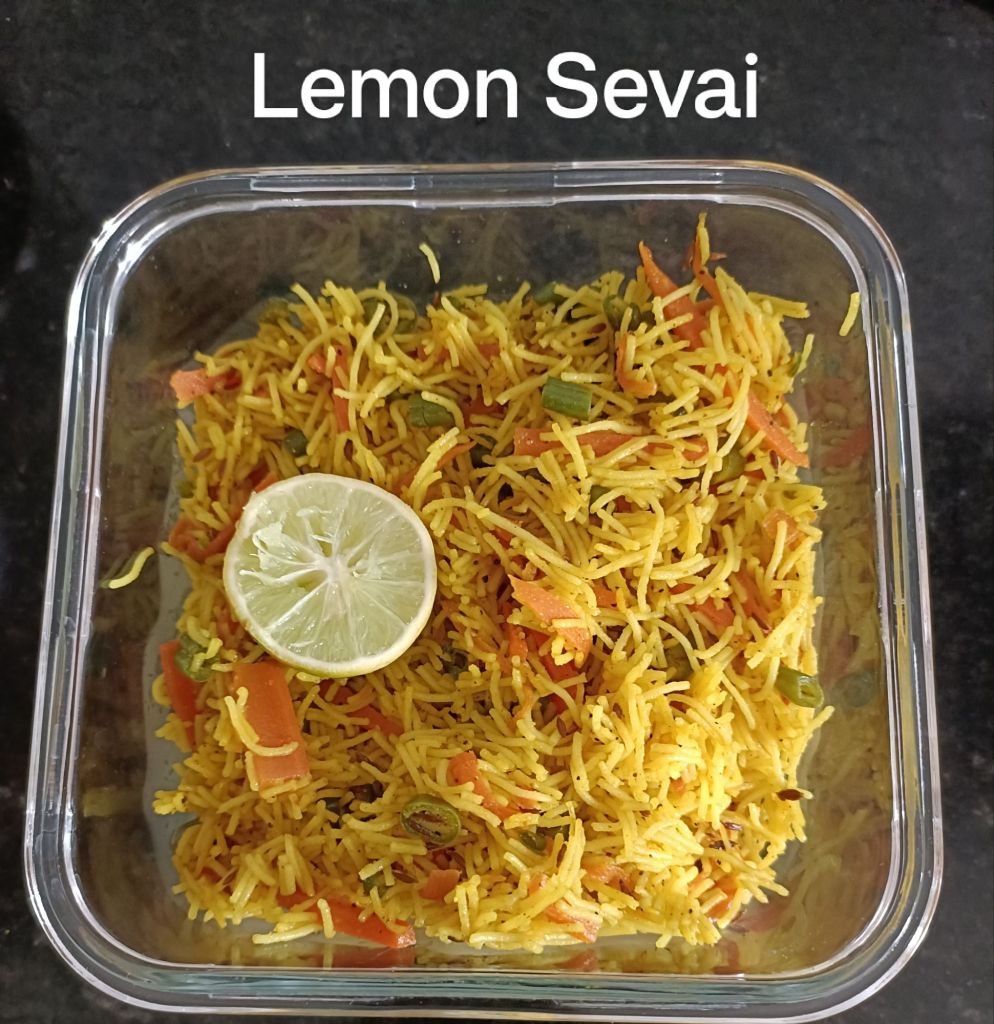
(503) Lemon Sevaiya

Ingredients

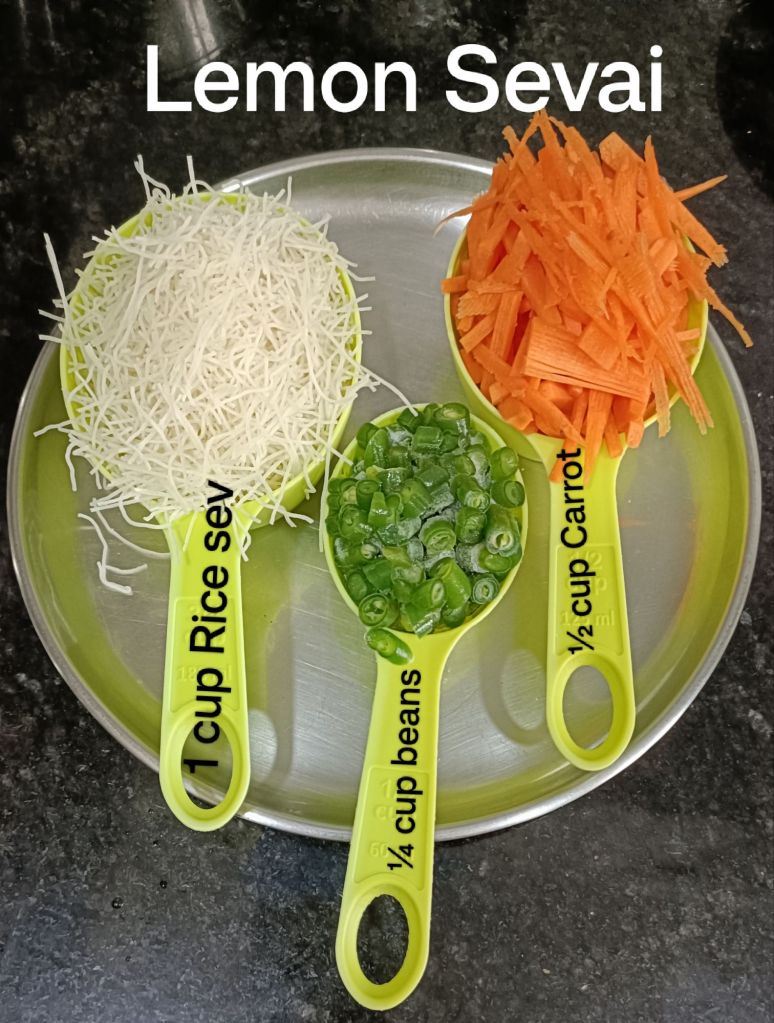
  • 1 cup rice sevai( rice vermicelli)
  • ½ cup grated Carrots.
  • ¼ cup Chopped Beans
  • 1 tsp. Salt
  • 2 tbsp. Lemon juice.
  • ½ tsp. Turmeric powder.
  • Tempering Ingredients
  • 2 tbsp. Oil or Ghee.
  • ¼ tsp. Cumin seeds.
  • ½ tsp. Chana dal.
  • ½ tsp. Udad dal.
  • ⅛ tsp. Asafoetida
  • 8-10 Cashews (optinal)
  • 10-15 Peanuts (optional)
  • 2 chopped Green Chilies ( optional)
  • ¼ tsp Ginger paste
  • ¼ tsp. Garlic paste (optional)
  • 8-10 Curry leaves.
  • ¼ cup finely chopped Coriander leaves.

Method

  1. Boil 1½ cup water and pour in the rice sevai bowl. Close the lid and keep aside for 10 minutes.
  2. After 10 minutes all sevai soak water and expand. Transfer entire contents in strainer.It looks fluffy and separate. Keep aside.
  3. Heat oil in a nonstick pan. Add Cumin seeds and wait for crackling sound, turn the flame slow and then add chana dal, soute for 30 seconds. Now add other ingredients one by one as follows and stir 2-3 times after adding each  ingredient. Add Udad dal, Cashews, Peanuts, Curry leaves, finely chopped Green Chillies, grated Ginger, Garlic paste and Coriander leaves. Again stir for 2-3 times.
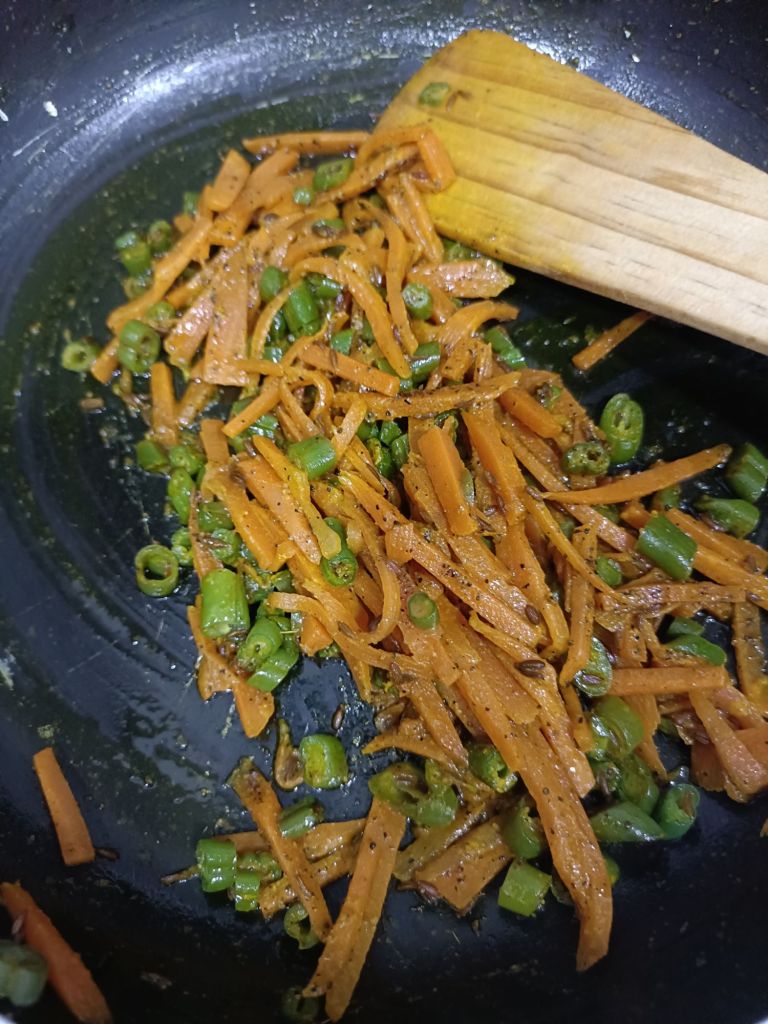
  4. Add Carrots and Beans. Add Turmaric powder and then pour 2 tbsp. Water and close the lid to cook. Still our gas flame is on slow. After 2-3 minutes check the Beans which take little more time to cook.
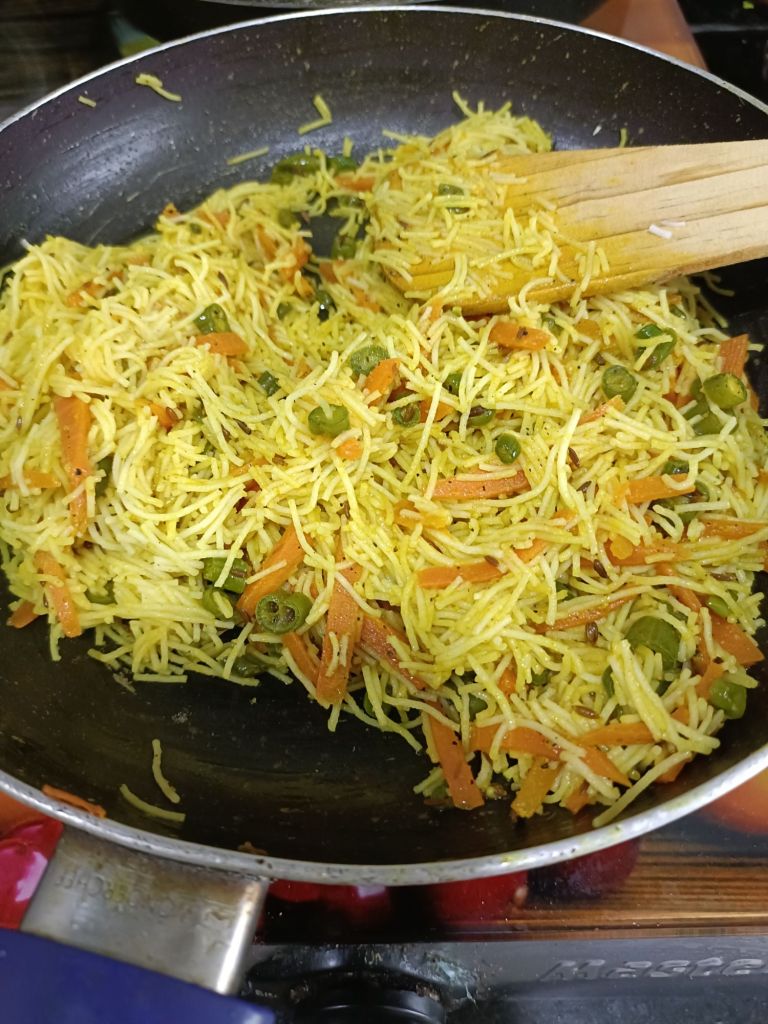
  5. Once beans cooked, turn the flame fast and mix rice sevai. Mix thoroughly.
  6. Switch off the flame and mix lemon juice in it. Serve hot with soup of your choice. Serve with love and smile.

                List Of My Recipes

Categories
leftover food My recipes

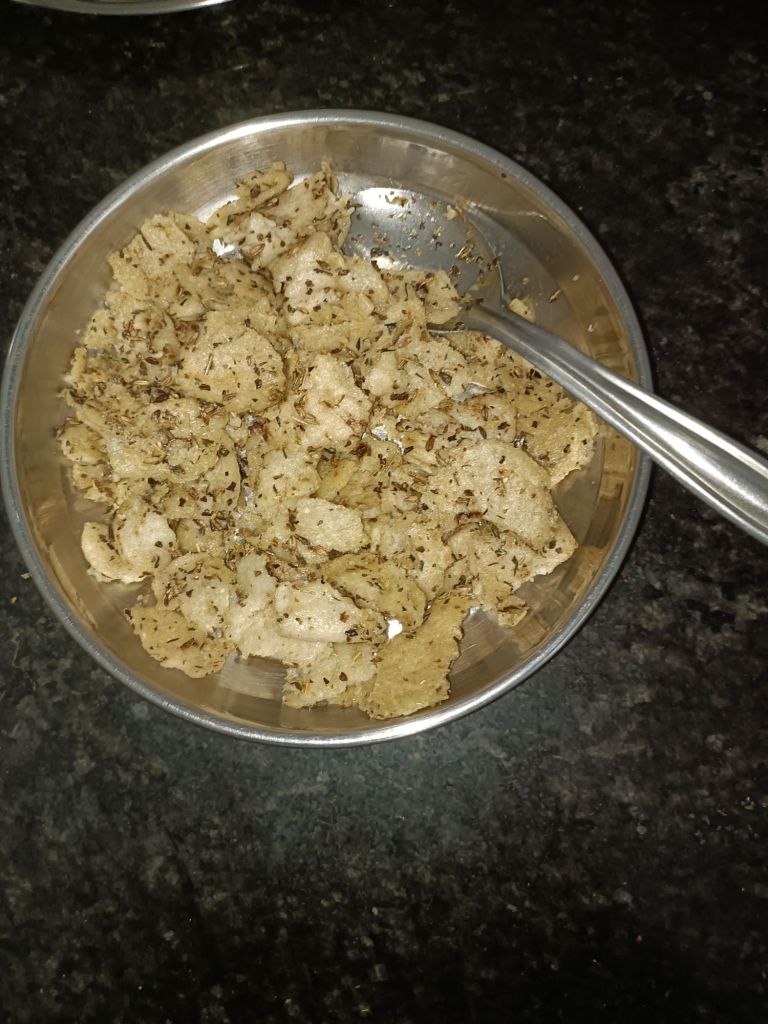
(502) Leftover Jowar Roti

Jowar (sorghum) is gluten-free and fiber-rich, which supports better bowel movement. Polyphenol present in the jowar roti helps to fight inflammation.  High content of magnesium help to improve bone health and iron  improve blood health.

Ingredients

  • 2 Leftover Jowar roti
  • 2 tbsp. Ghee
  • ½ tsp. Cumin seeds.
  • ½ tsp.Oregano powder.
  • ¼ tsp. Asafoetida powder.
  • ¼ tsp. Salt.

Method

  1. Break roti into small pieces and keep aside.
  2. Heat steel kadhai and add Ghee in it. Now add Cumin seeds. Wait for crackling sound and then add Asaphoitida powder and Oregano powder.
  3. Stir quickly and add jowar roti pieces. Roast it for 1- 2  minutes and switch off the flame.
  4. Serve it with plain curd or glass of butter milk or as you wish but serve with love and smile.

List Of My Recipes

Categories
My recipes Steamed food

(501) Vegetable Sevai Idli

Ingredients

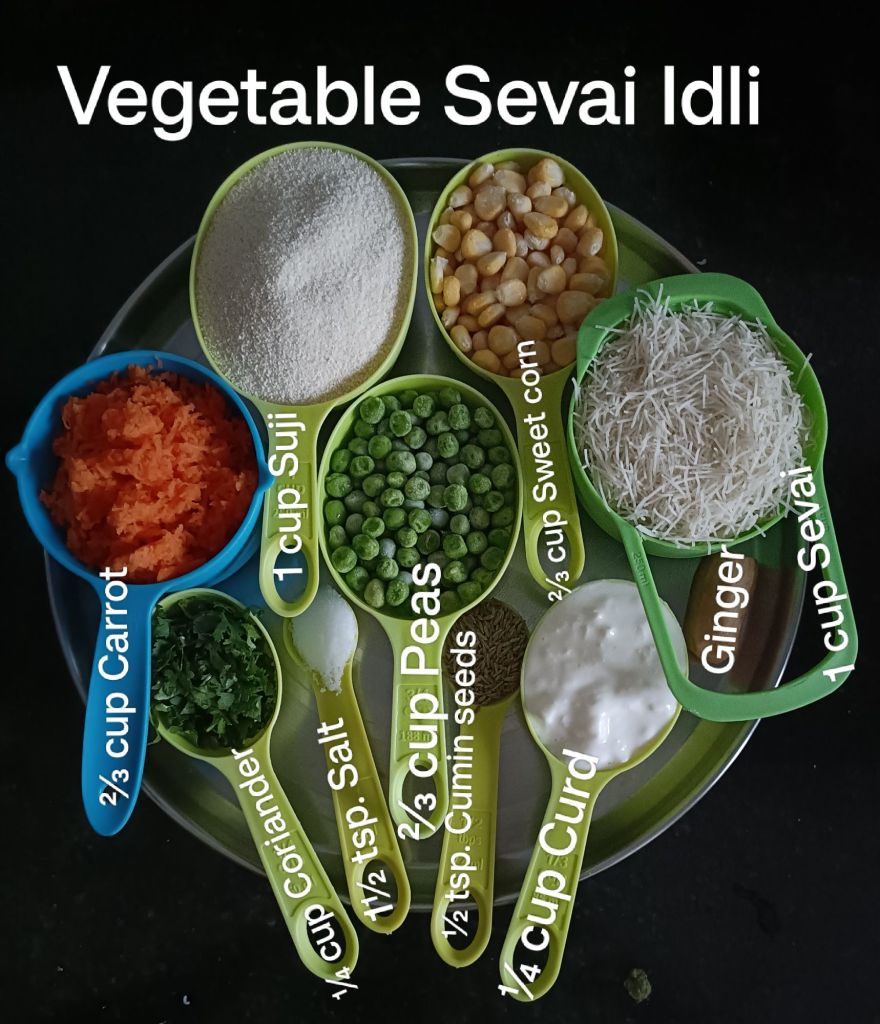
  • 1 cup Rice sevaiya.
  • 1 cup Suji.
  • ⅔ cup grated Carrot.
  • ⅔ cup Green Peas.
  • ⅔ cup Sweet corn.
  • ¼ cup Chopped Coriander leaves.
  • ¼ cup Curd.
  • 1½ tsp. Salt.
  • ½ tsp. Cumin seeds.
  • 2 inches long Ginger piece.
  • 2 finely chopped Green chilies (optional)
  • 2 tsp. Eno powder.
  • 1 tsp. Lemon juice.

Method

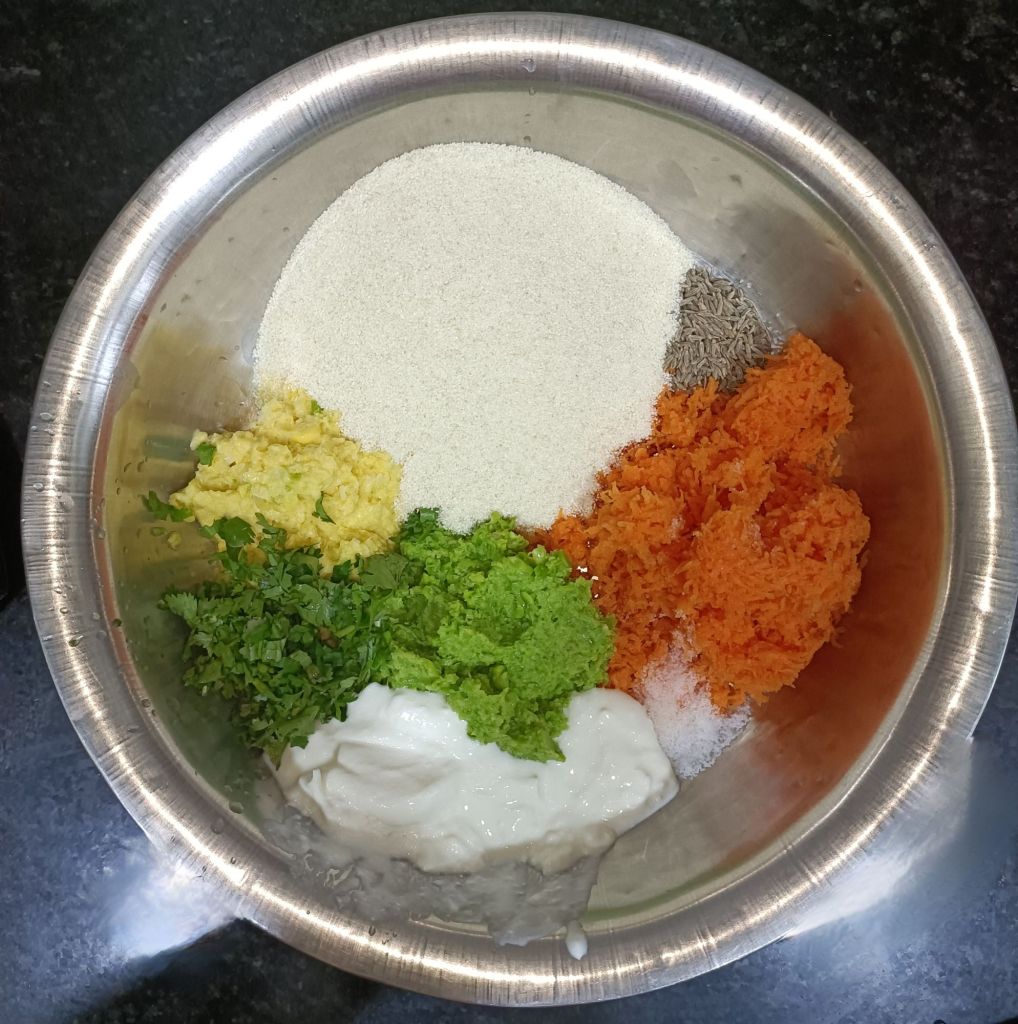
  1. In a mixing bowl mix Grated Carrots, Green Peas Sweet corn and chopped Coriander leaves together. Marinate it with curd and salt and keep aside for 5 minutes.
  2. After 5 minutes add Suji and Sevaiya together in it and mix well. If require then add ¼ cup water in it.
  3. Also mix Grated Ginger, Cumin seeds and chopped green chilies (optional).
  4. Close the lid and keep aside for 30 minutes.
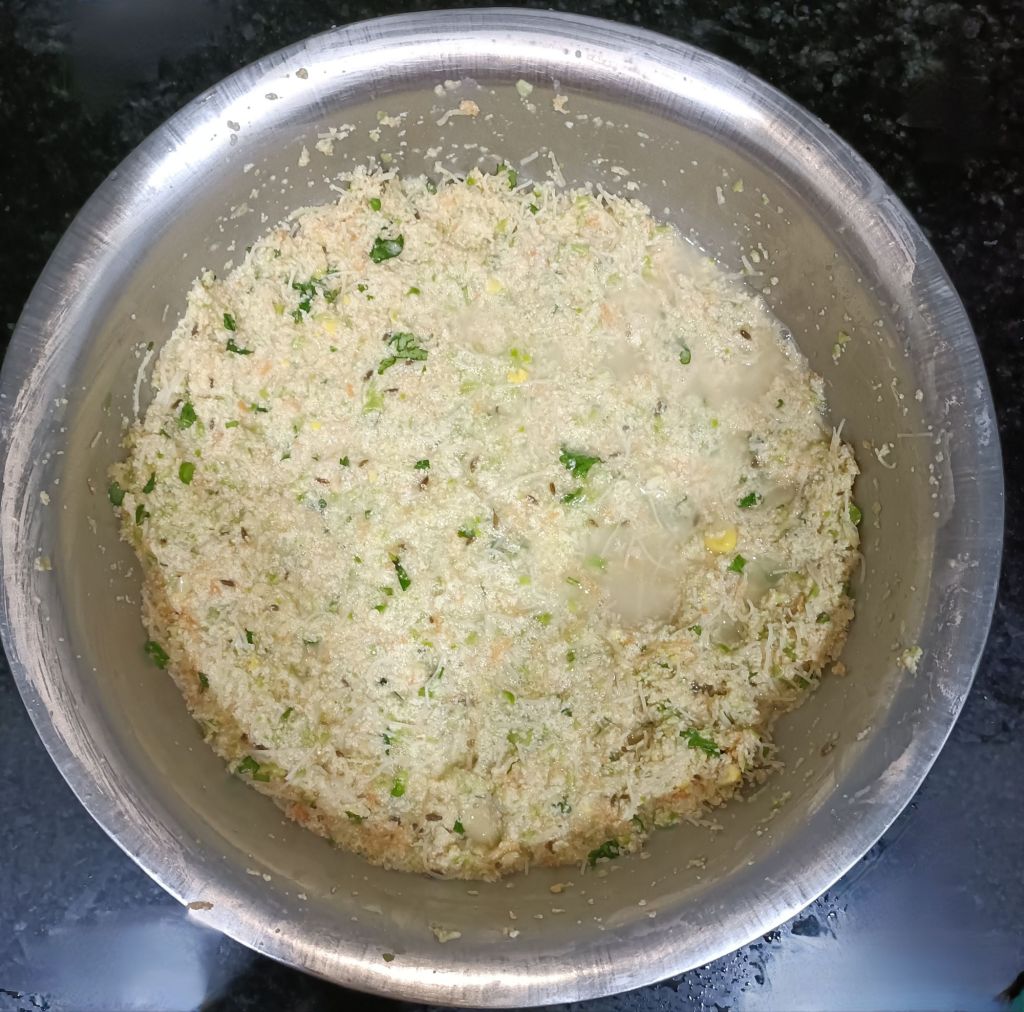
  5. After 30 minutes check the consistency. If it shows same as in video then it is perfect , otherwise add 1-2 spoon water to match the consistency. Add Eno in the batter and  on the heap of Eno pour lemon juice over it. Mix well but gently.
  6. Heat water in Idli cooker and after greasing add 2 tbsp of batter in each cavity of Idli stand.
  7. Steam filled Idli stand for 10 minutes.
  8. After 10 minutes open the lid and take out the stand from the Idli cooker.
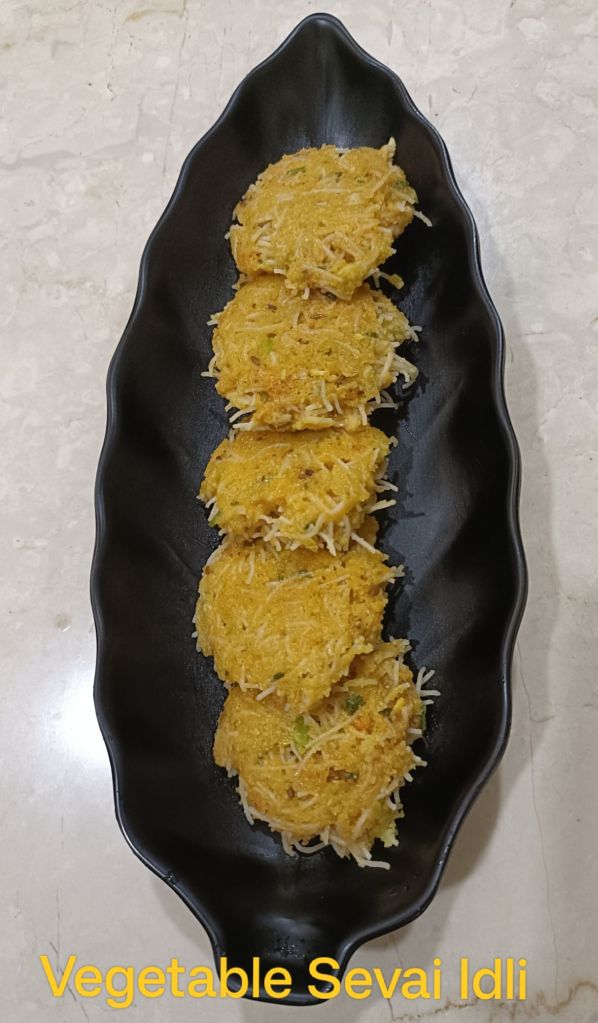
  9. Unmould all the Idlis and serve with Coconut chutney, Green chutney and Sambhar or as you wish but serve with love and smile.
Categories
Anniversary Post My recipes

🎉 Celebrating 5 Delicious Years!🍽️

2nd June 2025 — A Special Milestone

Today marks the 5th anniversary of my kitchen blog, which I started on 2nd June 2020. I’m overjoyed to share that I’ve now completed 500 recipes — each one personally made by me, never by a cook, and never copied from anywhere else.

In the beginning, I wrote recipes similar to how they appear in traditional cookbooks. But what always set mine apart was my focus on perfect, tried-and-tested measurements. Over the years, my blog has evolved. After earning certifications in Ayurveda and Diet & Nutrition, I began writing in a more holistic and informative style, including nutritional values and how ingredients can be used as home remedies.

What has remained unchanged from Day 1 is my core principle: I share only those recipes I have prepared with my own hands in my own kitchen. That authenticity is the heart of my blog.

One more thing that I’ve followed right from the start — and mention in every recipe — is to serve with love and a smile. This is not just a phrase, but a beautiful part of our Indian tradition: first, we serve others with love, and only then we eat. Cooking is not just about feeding the body, but about sharing warmth, care, and joy — and I try to reflect that in every dish.

On this special day, I feel deeply grateful to all of you — my wonderful readers, not only from my motherland India, but also from across the world, from Australia to America. Your support and encouragement have been my biggest motivation.

🙏 Thank you from the bottom of my heart.

I do have one small request: If you enjoy my recipes, please take a moment to leave your comments and feedback. They mean a lot to me and help me grow and improve.

Here’s to many more years of cooking, sharing, and connecting through food!

With love,
Rajeshree Gandhi
http://www.rajeshreegandhi.com

Categories
Home remedies My recipes

(500) Gulkand

Benefits of Chaitri Gulab

  • It balances Pitta dosha like heat rashes, acidity and irritability
  • Internally cooling and purifying so help in managing urticaria, heat induced rashes and other skin irruptions like pimples and acnes
  • It improves digestion and improve appetite and also acts as mild laxative
  • Rich in antioxidants which helps to rejuvenate tissues.
  • Due to its pleasent fragrance it reduces mental stress and uplift mood so use in Aroma therapy.

Ingredients

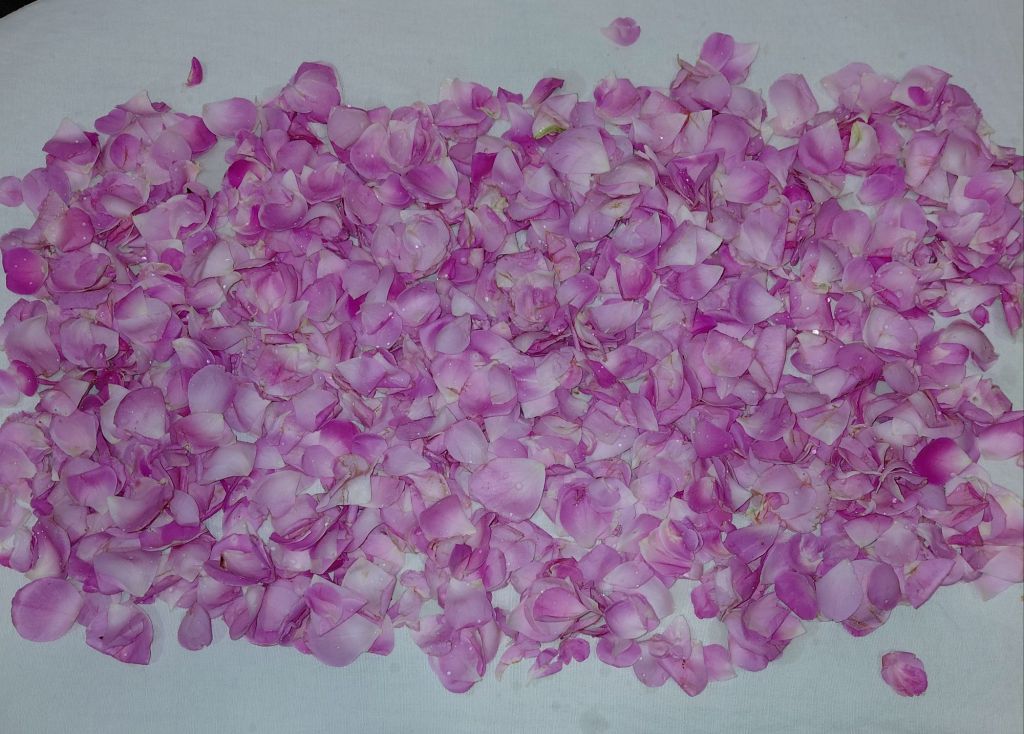
  • 300 g. Chaitri Roses.( Pink sweet scented real roses)
  • 500 g. Misri powder ( Rock Sugar)

Method

  1. Separate petals from the Rose flower
  2. Wash petals two times and then spread over kitchen towel for 1 hour under the fan.
  3. In a sauce pan make a lower layer with Misri powder.
  4. Spread Rose petals on the Misri layer
  5. Make another Misri layer over Rose petals.
  6. Fourth layer in the sauce pan is of Rose petals.
  7. And final fifth layer is of Misri powder.
  8. If your vessel is big and ingredients are less then make sure that your upper and lower layer should be of Misri powder.
  9. Close the lid of the sauce pan and keep aside for 24 hours.
  10. Next morning open the lid, stir thoroughly and either cover the pan with cloth or net strainer and keep this pan under the Sun for 7-8 hours.
  11. In the evening bring the pan inside the home, stir well, close the lid and keep aside.
  12. Repeat the same process for 4-5 days and the Gulkand will be ready.
  13. If you doesn’t have Sunlight facility then you can prepare inhouse in the oven for 50-65°C for 1 hour for 5-6 days. Please don’t keep more than one hour per day in the oven.
  14. This time I had prepared in month of May and accidentally weather changed so prepared in oven on 65°c for one hour and in this way It was ready in 6 days. Try to prepare Gulkand in month of April and dry off all excess water from the petals with the help of spreading washed petals on kitchen towel for 2 hours under the fan.
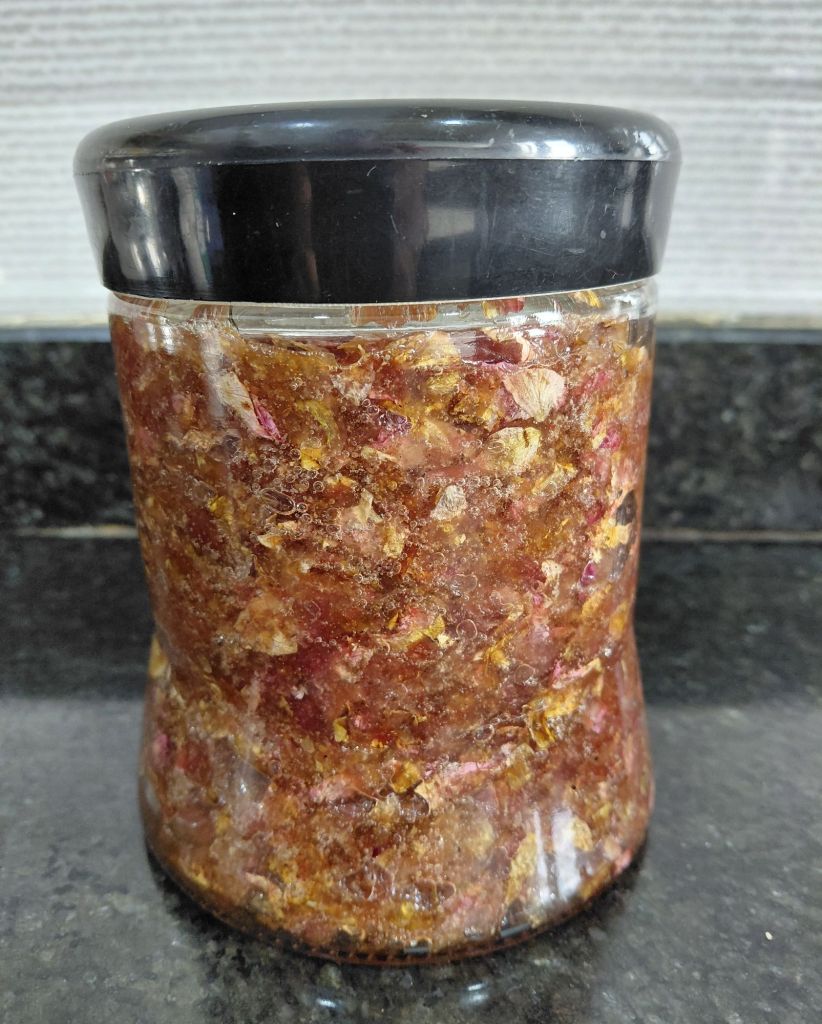
  15. In both the way testing of the Gulkand is same. It should have glossy and sticky consistency.
  16. Store in air tight glass jar.
  17. Serve 1 tspoon every day with chilled milk. Serve with love and smile.
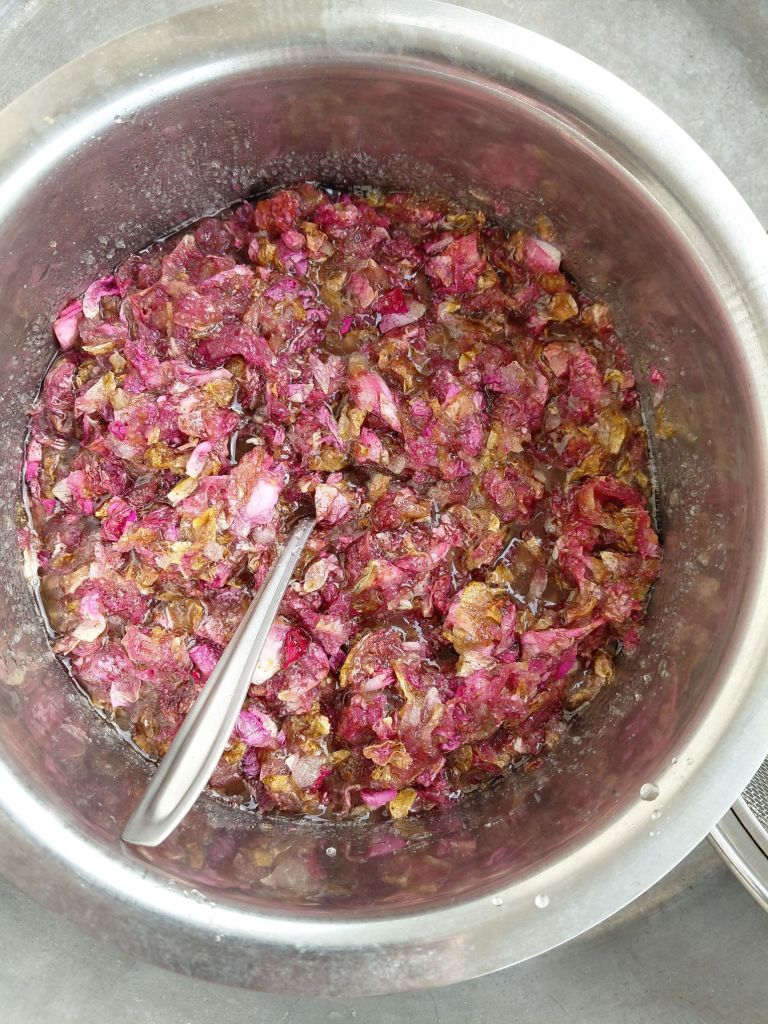
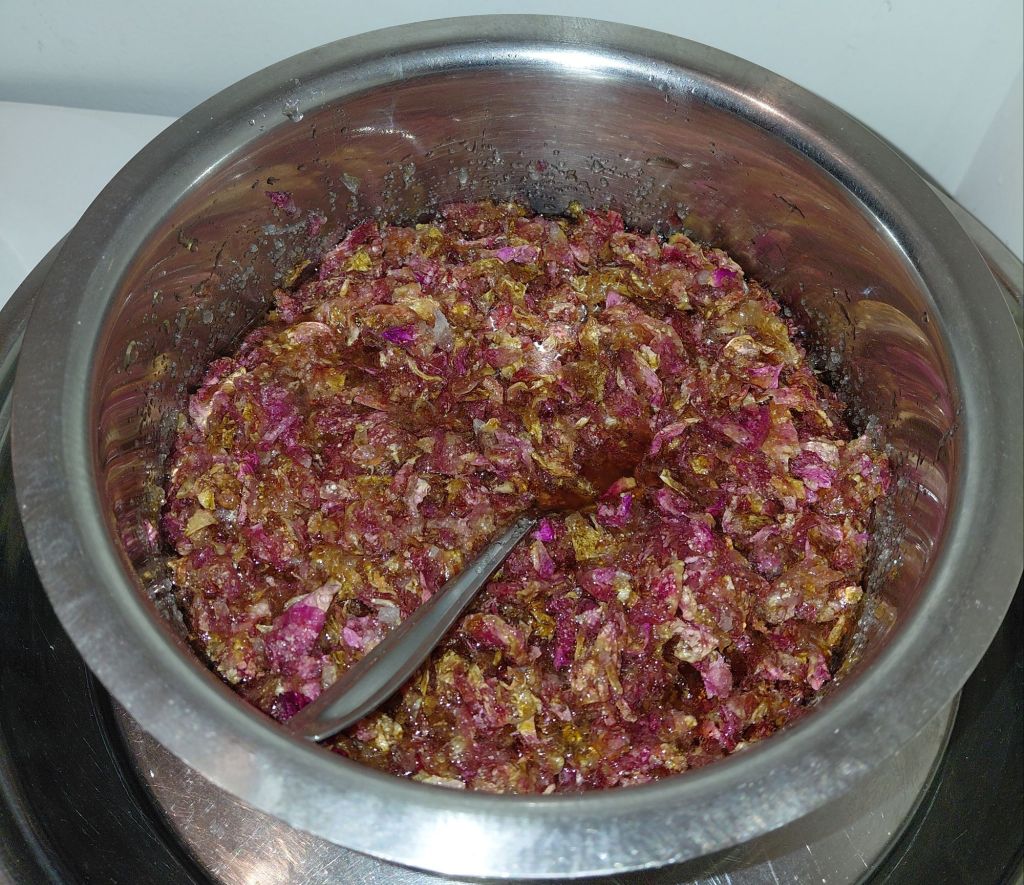
Chaitri Gulab
1st Day
3rd Day
5th Day
Gulkand

List Of My Recipes

Categories
Daal My recipes

(499) Rasawali Matki

Rasawala Math

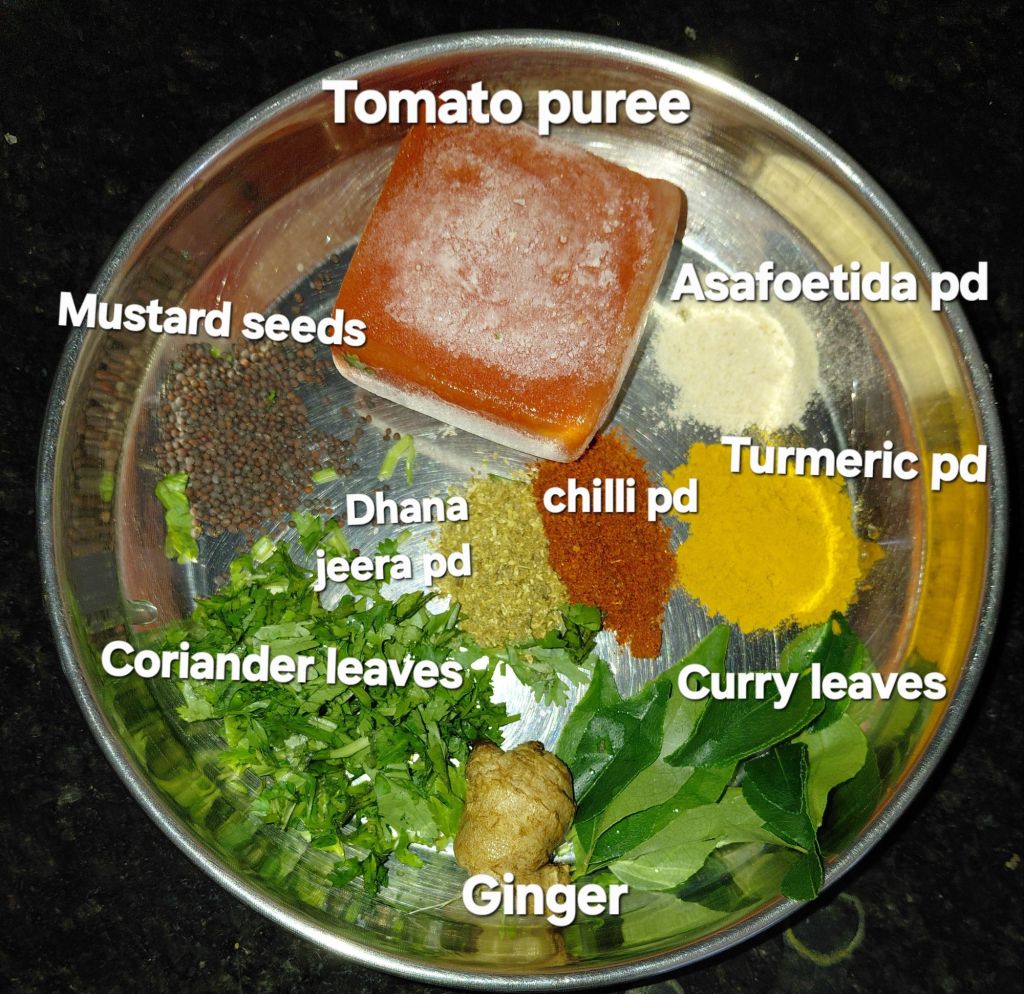
Ingredients

  • ¼ cup Matki
  • 1 cube Tomato puree cube.
  • OR 3-4 Garcenia (Kokum)
  • 1 tbsp. Jaggery.
  • 1¼ tsp. Salt.
  • ½ tsp. Red Chilli powder.  
  • ½ tsp. Coriander Cumin powder.
  • ¼ tsp. Turmeric powder.
  • 2 Green chilies
  • 1 inch long Ginger piece.
  • Tempering ingredients.
  • 2 tbsp. Oil
  • ¼ tsp. Mustard seeds.
  • ¼ tsp. Asafoetida powder.
  • 8-10 Curry leaves.
  • 2 tbsp. finely chopped Coriander leaves.

Method

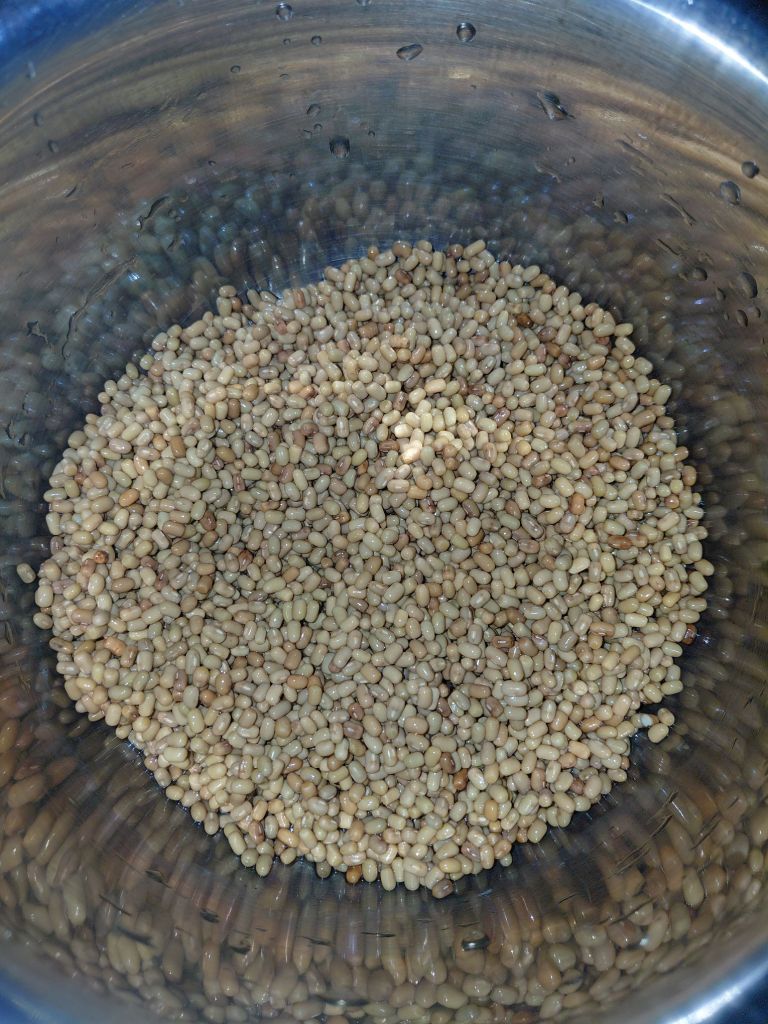
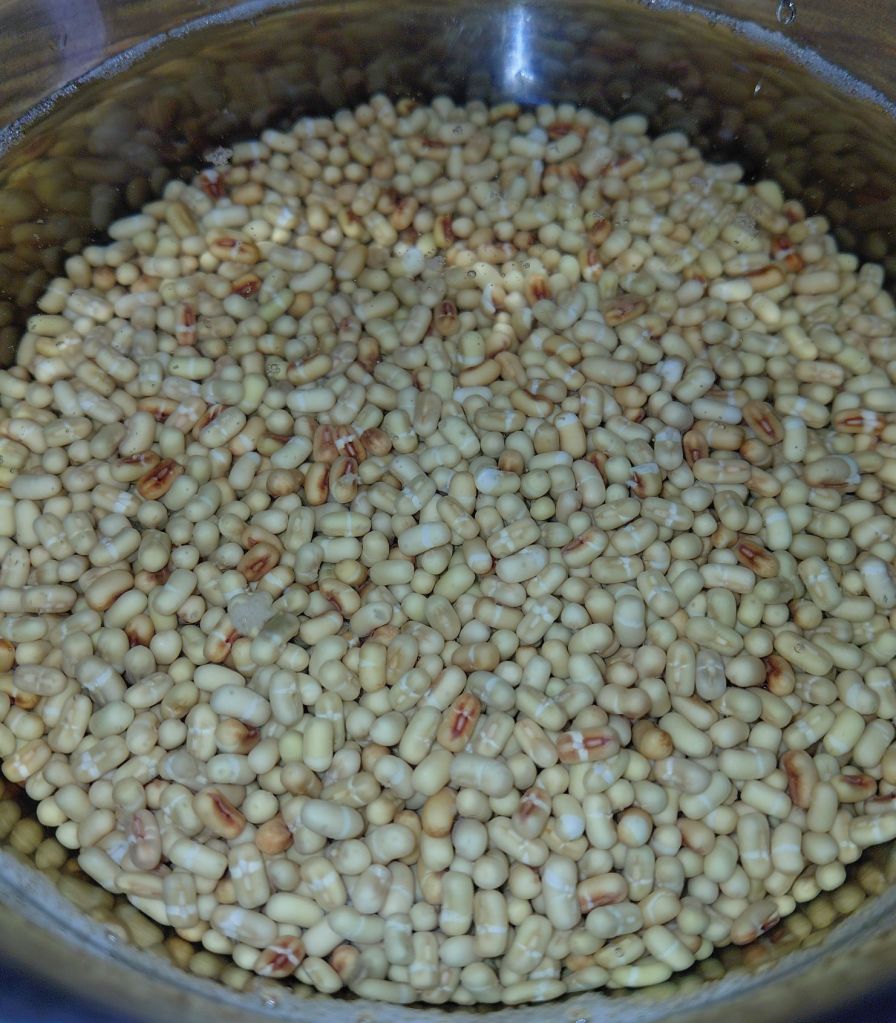
  1. Wash Matki 2 times and soaked it for 8-10 hours.
  2. After 8 hours discard the water and again wash Matki with fresh water. 
  3. In a  pressure pan  add half liter water, salt,  turmeric powder and soaked Matki. Cook the Matki till 3-4 whistles.
  4. Once pressure released open the lid, check the grains of Matki whether it is cooked or not by pressing one or two grains with the help of fingers. If grains get meshed, it means Matki is cooked and if grains breaks into two to four parts, it means it requires to cook matki for two more whistles.
  5. When pressure released open the lid and again check that grains are cooked or not.
  6. Heat Matki pan again and add all spices, tomato puree or kokum and jaggery.
  7. Simultaneously heat oil in tadka pan and add Mustard seeds.
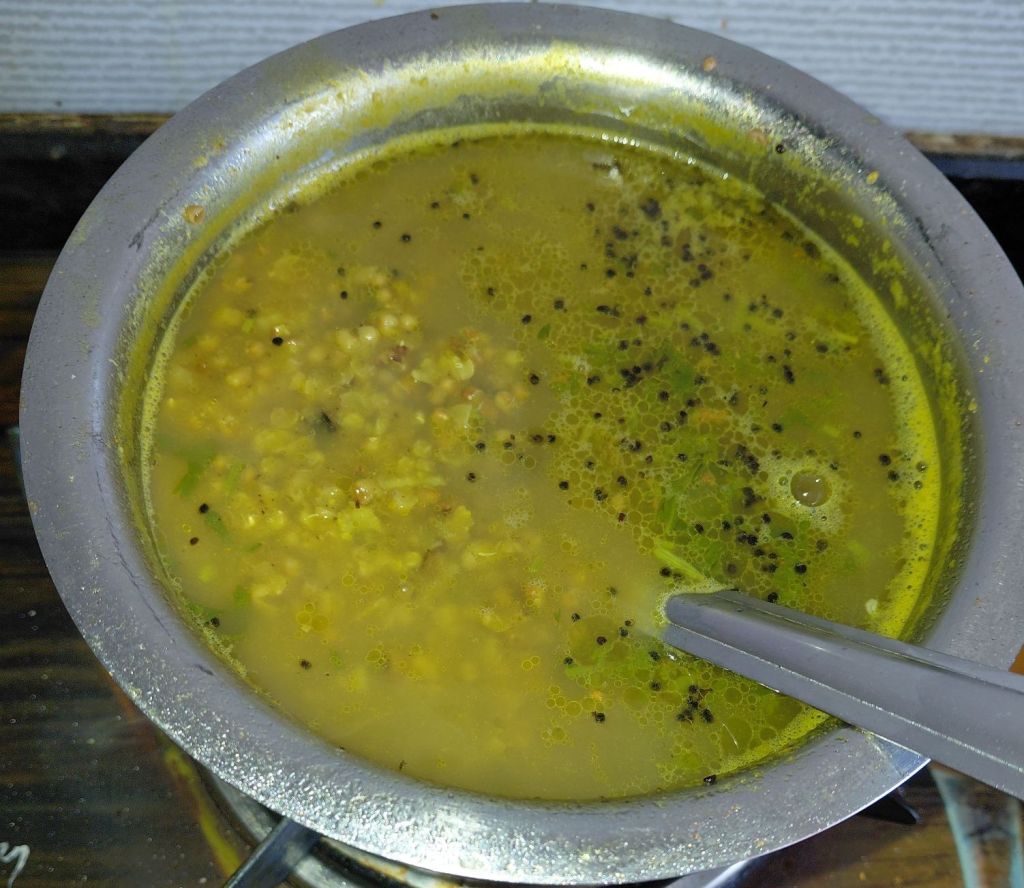
  8. After crackling sound add Asaphoitida powder, Curry leaves, Red chilli powder, Coriander Cumin powder and Coriander leaves. Stir well and pour this tadka in the Matki pan.
  9. Simmer it for five minutes and then switch off the flame.
  10. Serve hot with roti, paratha, millet roti, bhakri, rice or as you wish but serve with love and smile.
Soaked Matki

List Of My Recipes

Categories
My recipes salads

(498) Fresh Herbs and Lemon Dressing

Ingredients

  • 1 tbsp. Lemon juice.
  • 1 tbsp. Olive oil.
  • 1 tsp. Chopped Coriander leaves.
  • 1 tbsp. Chopped Mint leaves or Basil leaves or Parsley
  • ½ tsp. Salt
  • ½ tsp. Black Pepper powder

Method

  1. Mix all the ingredients in a mixing bowl.
  2. Pour over the leafy salads like Spinach, Radish leaves, Baby spinach, Amaranth leaves, Moringa leaves, Microgreen of Fenugreek, Microgreen of pulses.
  3. Serve with love and smile.

List Of My Recipes